CT094-3-3-WMSS · Chapter 02
Introduction
Learning outcomes
- Realize the importance of wireless and mobile technology.
- Identify the enabling technologies in wireless and mobile technology.
- Understand Mobile Cellular Networks
- Identify the Challenges facing wireless networks
Topic structure
- Introduction to wireless networks and mobile computing
- Challenges facing wireless networks and mobile computing
- Introduction to wireless physical layer
Key terms
Types of Wireless NetworksMANETSWSNVANETSSPANS
Goal of Wireless Networking and Mobile Computingslide 5
- People and their machines should be able to access information and communicate with each other easily and securely, in any medium or combination of media – voice, data, image, video, or multimedia – any time, anywhere, in a timely, cost-effective way.
Enabling Technologiesslide 6
- Development and deployment of wireless/mobile technology and infrastructure
- Miniaturization of computing machinery
- . . . -> PCs -> laptop -> PDAs/smart phones ->embedded computers/sensors
- Development environments, e.g.,
- Andriod: http://code.google.com/android/
- iPhone: http://developer.apple.com/iphone/
- Windows mobile
Pervasive Use of Mobile Wireless Devicesslide 7
- There are around 4 billion mobile phones
- Penetration rates higher than that of the population
- The mobile device is the primary connection
- Tool to the Internet for most people in the world.
List of some countries by number of mobile phones in useslide 8
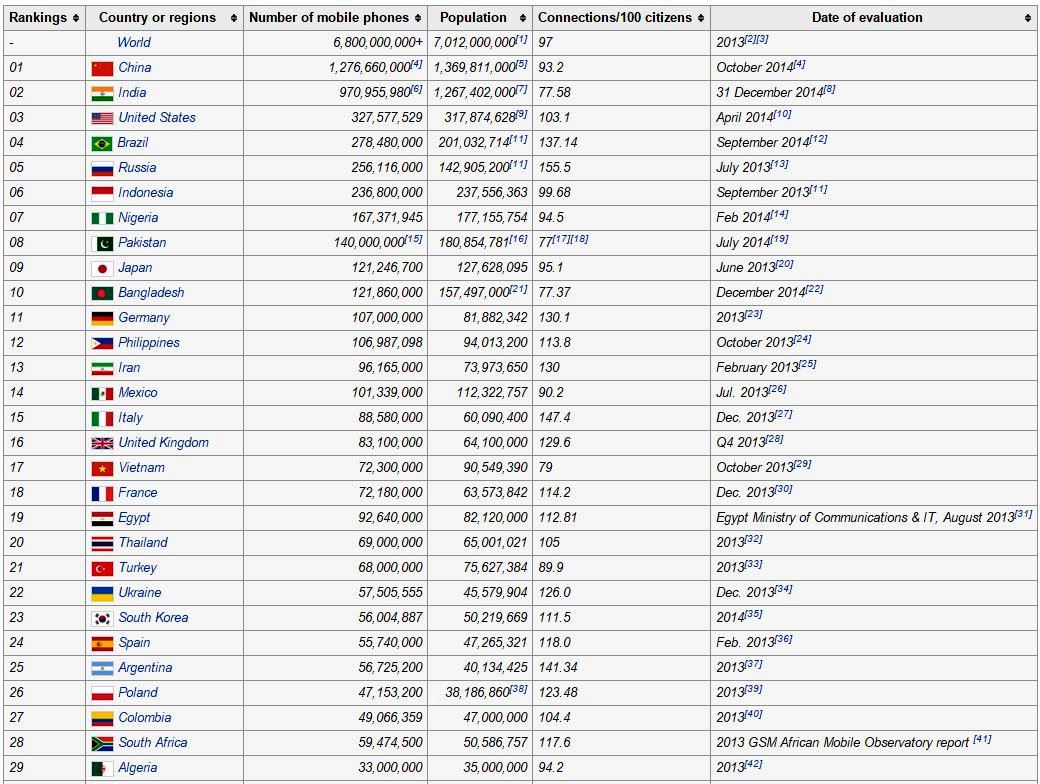
Source: https://en.wikipedia.org/wiki/List_of_countries_by_number_of_mobile_phones_in_use
List of some countries by smartphone penetrationslide 9
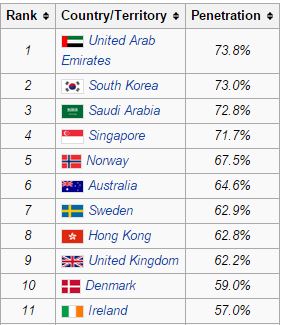
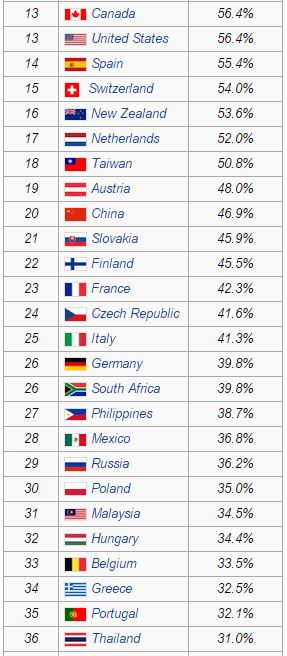
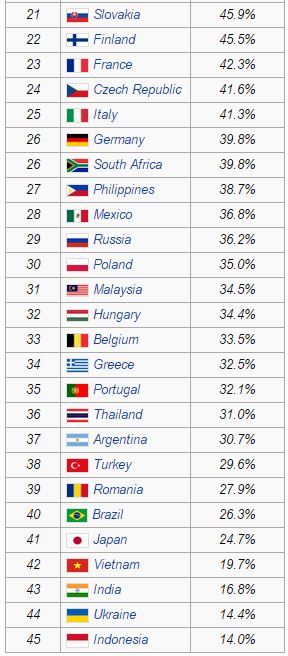
Source: https://en.wikipedia.org/wiki/List_of_countries_by_smartphone_penetration
Disaster Recoveryslide 10
- Tsunami, Hurricane Katrina, South Asian earthquake, Haiti …
- Wireless communication and mobile computing capability can make a difference between life and death !
- rapid deployment
- efficient resource and energy usage
- flexible: unicast, broadcast, multicast, anycast
- resilient: survive in unfavorable and untrusted environments
Mobile Systemsslide 12
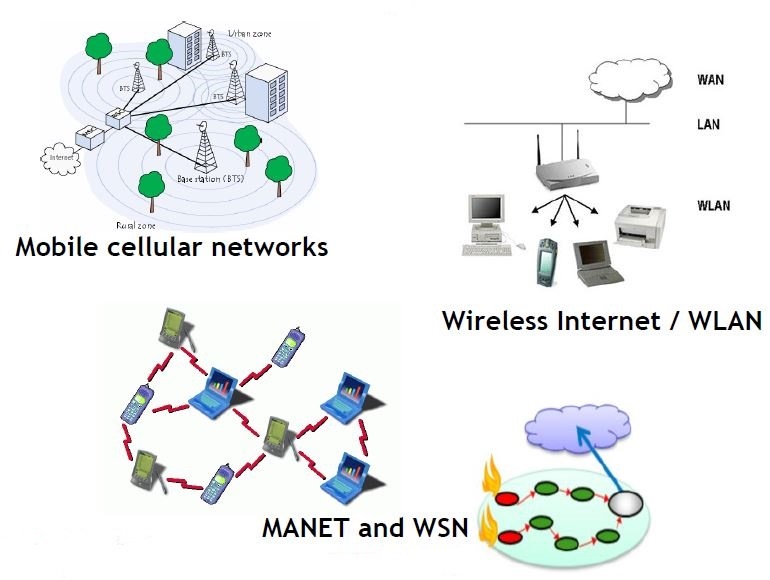
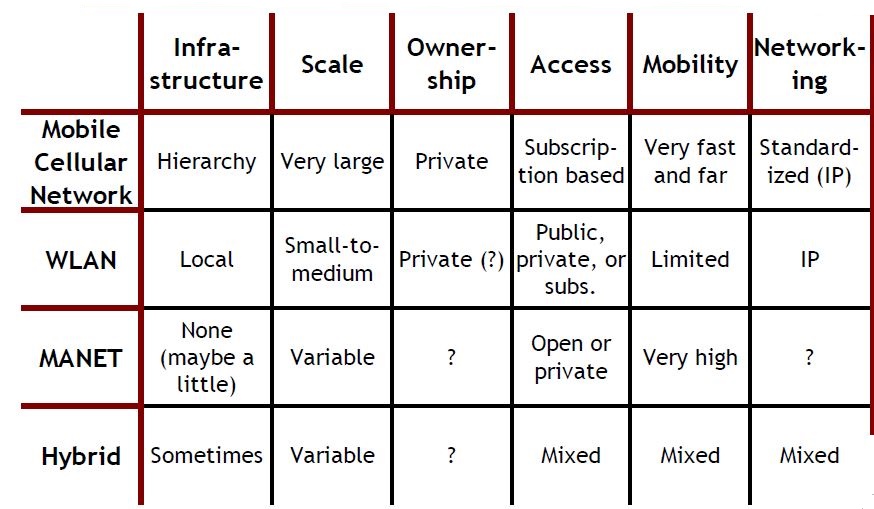
Mobile Cellular Networksslide 13
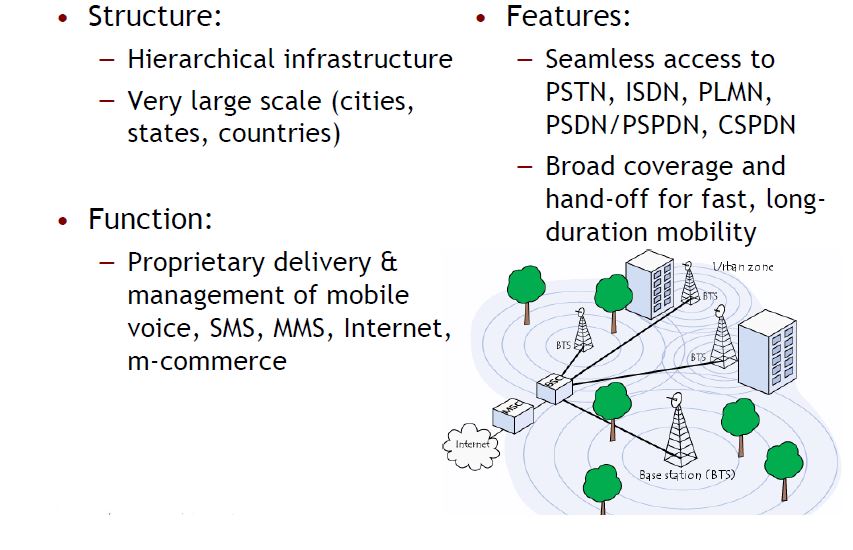
- PSTN: Public switched telephone network
- PLMN: Public land mobile network
- PSDN: Public switched data network
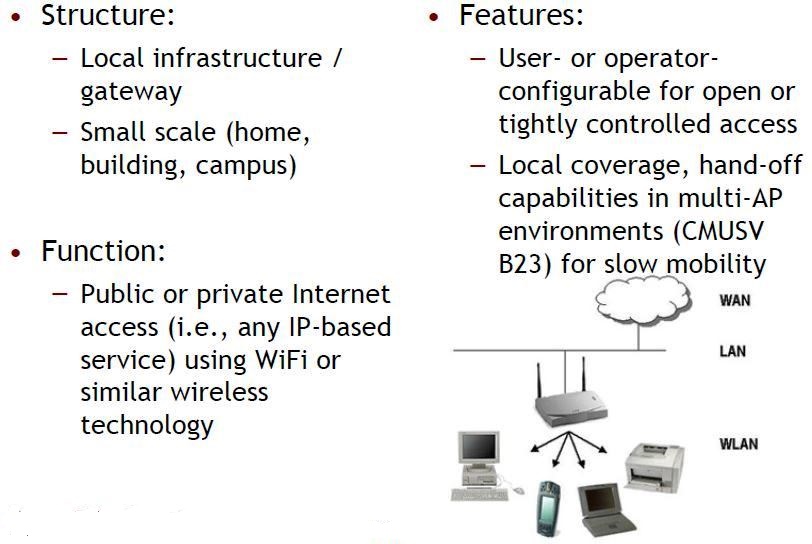
WLAN Networksslide 14
MANETsslides 15–16
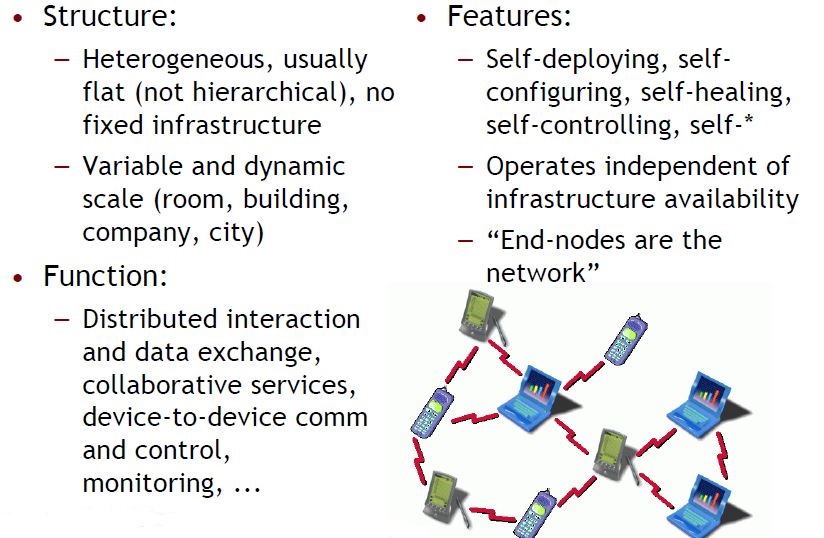
- is a continuously self-configuring, infrastructure-less network of mobile devices connected without wires.
- Each device in a MANET is free to move independently in any direction and will therefore change its links to other devices frequently
- In MANET each device continuously maintain the information required to properly route traffic
- MANETs are a kind of Wireless ad hoc network that usually has a routable networking environment
- The growth of laptops and 802.11/Wi-Fi wireless networking have made MANETs a popular research topic nowadays
Types of MANETSslide 17
- Vehicular Ad hoc Networks (VANETs): are used for communication between vehicles and roadside equipment.
- Smart Phone Ad hoc Networks (SPANs): leverage the existing hardware (primarily Bluetooth and Wi-Fi) in commercially available smart phones to create peer-to-peer networks without relying on cellular carrier networks.
- Internet based mobile ad hoc networks (iMANETs): are ad hoc networks that link mobile nodes and fixed Internet-gateway nodes
Architectural Comparisonslide 18
Mobile and wireless challengesslides 19–22
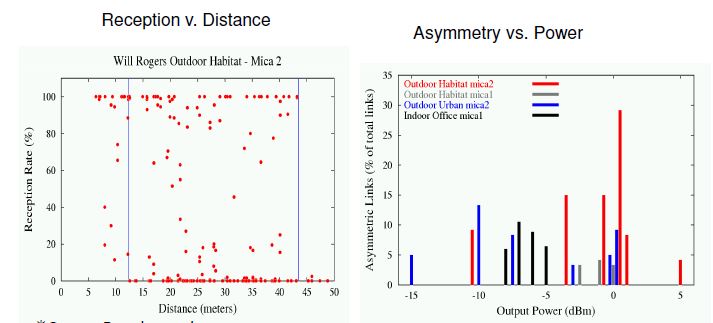
- Challenge 1: Unreliable and Unpredictable Wireless Coverage
- Wireless links are not reliable: they may vary over time and space
- Challenge 2: Open Wireless Medium
- User/device/system verification is more difficult, mutual authentication may be required, currently, rogue BTS and BS can be deployed, and availability is difficult.
- Most systems aren't designed with redundancy resilience to malicious behavior
- Challenge 3: Mobility
- Mobility causes poor-quality wireless links
- Mobility causes intermittent connection
- under intermittent connected networks, traditional routing, TCP, applications all break
- Mobility changes context, e.g., location
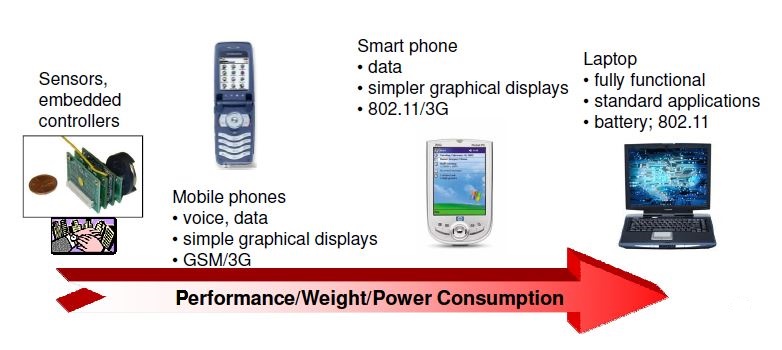
- Challenge 4: Portability
- Limited battery power
- Limited processing, display and storage
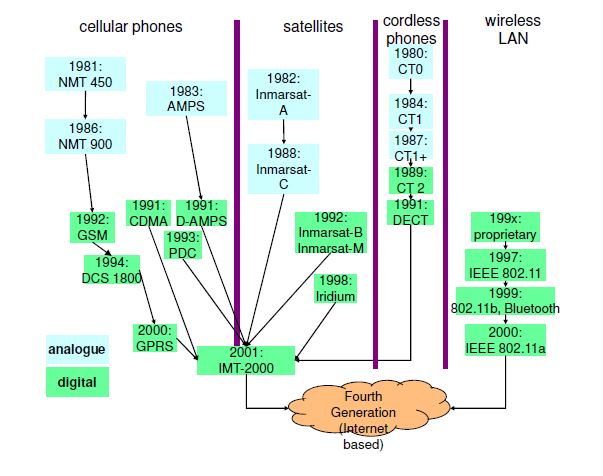
Challenge 5: Changing Regulation and Multiple Communication Standardsslide 23
Common Considerationsslide 24
- Nothing is free
- Security costs $$$, time, CPU cycles, bandwidth,user-experience, etc.
- Incentives?
Wireless LANsslide 25
- Advantages
- very flexible within the reception area
- ad-hoc networks without previous planning possible
- (almost) no wiring difficulties (e.g., historic buildings)
- more robust against disasters like, e.g., earthquakes, fire - or users pulling a plug...
- cheap (additional users don’t increase cost)
- Disadvantages
- typically, low bandwidth compared to wired networks
- (1-10 Mbit/s) due to shared medium, more interferences
- many proprietary solutions, especially for higher bit-rates, standards take their time (e.g., IEEE 802.11n)
- products have to follow many national regulations, takes time for global solutions (IMT-2000).
- safety/security
Quick review questions
- Explain different types of wireless networks?
- What is MANET? What are the type of it?
- Explain the different challenges in mobile and wireless networks.
- List some of the advantages and disadvantages of WLAN.
Summary of main teaching points
- There are around 4 billion mobile phones and over 50 countries have mobile phone subscription.
- The mobile devices will be the primary connection and hence the penetration rates are very high.
- wireless communication is most widely used solution in disaster recovery.
- MANET is a continuously self-configuring, infrastructure-less network of mobile devices connected without wires.
- Challenges exists for wireless networks.
Social Networking On the Moveslide 11